Claude skills for marketing: the 6 we run our outreach on (free to copy)

- Published
- 15 November 2026
- Prices checked
- 15 November 2026
We run our outreach on 6 Claude skills: our own marketing-director brain plus 5 free MIT skills. Cold-email and customer-research come from Corey Haines' marketingskills; campaign-strategy, experiment-design and creative-ideas from Growth Engine X's coldoutboundskills. A skill is a folder with a SKILL.md file that Claude loads when a task matches.
The 6 skills at a glance
| Skill | What it does | Where to get it | When we run it |
|---|---|---|---|
| marketing-director | Loads our rules first: approved claims, who we sell to, research before ideas, what not to do; then routes to the other five | Ours; the structure is below to copy | Before any marketing task, including scheduled runs |
| cold-email | Writes and reviews cold emails, follow-ups and plays; covers deliverability and reply handling | coreyhaines31/marketingskills, MIT | Every email template and every batch before it is queued |
| customer-research | Mines reviews, threads, job posts and interviews for the buyer's own words; builds personas without invented details | coreyhaines31/marketingskills, MIT | Before we touch a new niche |
| campaign-strategy | Generates 15–25+ campaign ideas, each with a list, a message and an AI personalization approach | growthenginenowoslawski/coldoutboundskills, MIT | When we plan a new segment |
| creative-ideas (we call it playbook-creative-ideas) | The "I had three ideas for you" email, where the model only fills slots you named | growthenginenowoslawski/coldoutboundskills, MIT | When an email offers ideas for their business |
| experiment-design | One variable per test, sample size and pass/fail written before launch | growthenginenowoslawski/coldoutboundskills, MIT | Every Monday, when we plan the week's test |
Swipe the table sideways for all columns. Repos, licences and skill names read on GitHub on 15 November 2026. We copied the five outside skills into our repo unchanged on 12 November 2026, with their licence files.
That is the whole list. Two libraries do most of the craft, and one file of our own decides when each gets used and which rules can't bend.
What a Claude skill is, in one minute
Anthropic's help page calls skills "folders of instructions, scripts, and resources that Claude loads dynamically". In practice a skill is a folder with one SKILL.md file. The top of the file holds a name and a one-line description of when to use it. Claude reads only those descriptions until a task matches, then loads the full file and any reference files beside it.
Why that matters for marketing:
- Your rules apply every time. No more pasting the same brief into every chat.
- They cost little when idle. Anthropic's Claude Code docs suggest moving task-specific instructions out of CLAUDE.md and into skills, because skills load only when used.
- They work in more than one place. Skills run in Claude Code, in the Claude apps on Free, Pro, Max, Ultra, Team and Enterprise with code execution on, and in beta on the API.
A plugin is a bundle: skills, connectors and sub-agents installed together. Anthropic's own marketing plugin has seven commands (draft content, campaign plan, brand review, competitive brief, performance report, SEO audit, email sequence) and is built mainly for Cowork.
1. marketing-director: the brain that loads first
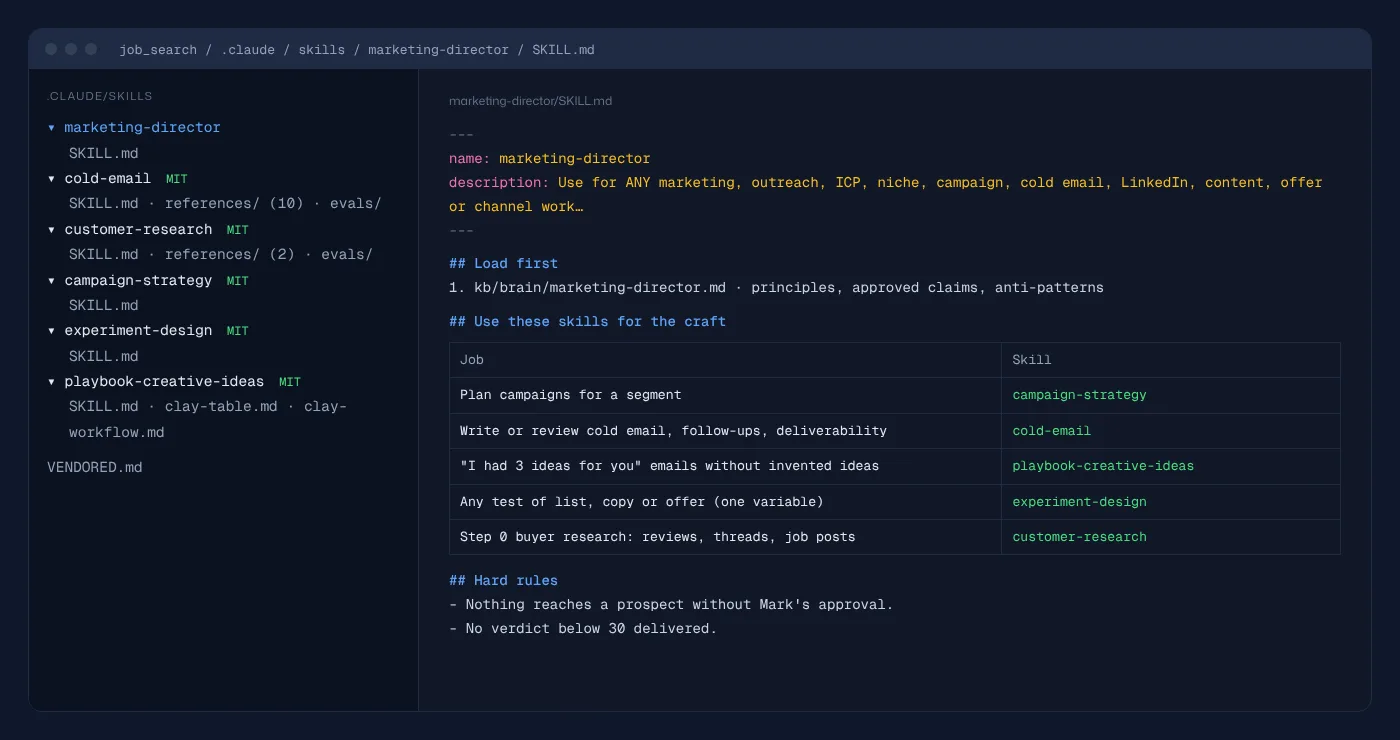
This is the only skill we wrote. It is short on purpose. The skill file tells Claude what to read before doing any marketing work, which craft skill handles which job, and the rules that can't bend. The detail lives in one knowledge-base file it points to:
- Who we sell for: the offer, the countries, the entry price.
- Approved claims: the only proof lines a draft may use without asking. Any other number or client name needs Mark's OK.
- Principles, each with its outside source: start from clients who already paid; the free working sample is the outreach; one variable per test.
- A weekly loop: what runs daily, Monday, Wednesday and Friday.
- Anti-patterns: every correction Mark has made, dated, so the same mistake doesn't come back.
To copy the pattern, make a folder called marketing-director inside .claude/skills, with a SKILL.md that has four parts: a description listing every kind of marketing task, a "load first" list of your own files, a table routing each job to a craft skill, and three to five hard rules. Ours include "nothing reaches a prospect without approval" and "no verdict below 30 delivered".
The marketing-director brain, version 2
AI runs on · Claude Code, loaded as a project skill on every marketing task
We built the brain from outside sources before writing any rules: 30 full talk and video transcripts from practitioners with work you can check, plus skill repos and operator posts. Each principle names where it came from. The five outside skills were picked after cloning eight skill repos and reading their SKILL.md files.
Version 1 read only 8 transcripts, leaned on course sellers instead of practitioners, and Mark rejected it. Transcripts were blocked on the first try, so version 2 pulled them through a scraper for $1.46 and kept only mechanics someone had shown working.
2. cold-email: the rules every email has to pass
Corey Haines' cold-email skill writes and reviews outbound: first emails, follow-ups, plays, reply handling and sending setup. It ships with ten reference files, from subject lines to deliverability. The rules we lean on most, from its SKILL.md:
- Write like a peer, not a sales machine.
- Personalization must connect to the problem. If you can delete the opener and the email still makes sense, it isn't working.
- Ask for interest, not a 30-minute call.
- Subject lines of two to four words, lowercase.
- Send from secondary domains, verify the list first, and turn off open tracking.
- No AI tells: no "it's not X, it's Y", no self-answered questions, no em dashes.
- One reply stops every channel.
We add our own limits on top: plain text, under 90 words, no link in the first email, signed with a first name.
3. customer-research: the buyer's words before any copy
Also from Haines' library. It runs research in three modes: what you already have (transcripts, surveys, reviews, support tickets), what's online (Reddit, review sites, forums, communities), and asking directly (interviews and surveys). It turns the findings into themes ranked by how often and how strongly people say them.
Two rules make it worth installing. It won't draw messaging conclusions from fewer than five independent data points per segment. And when a persona detail is missing, it leaves the field blank instead of inventing one. It also treats fetched reviews and posts as untrusted data, so text inside a page can't steer it.
We run it as step 0 before any new niche gets a list or a template.
4. campaign-strategy: 15 or more ideas, each with a list and a message
From Growth Engine X's coldoutboundskills. Give it a website or a business brief and it produces at least 15–20 campaign ideas, from broad lists to narrow ones. Every idea has two levers: who is on the list, and what value it leads with. The narrower the list, the more the message can name the reason they were picked.
Three campaign types are required in every plan: a creative-ideas campaign, a new-hire campaign for people new in their role, and a lookalike of your best customers. Its test for each idea: "If a sales rep had 10 minutes to research a company before reaching out, what would they look for and why?"
5. creative-ideas: three ideas without invented ones
The "I had a few ideas for your business" email is easy to ruin. Ask a model for three ideas about a company and it invents. This playbook fixes that with slot discipline: you name what bullets 1, 2 and 3 are about, once, for the whole campaign. The model only fills each slot with a fact true of that company.
The repo reports its own test: free-form ideas were usable 2 times out of 5; slot-defined ideas 21 of 23 (91%). One hard gate comes with it: a person writes three complete examples before any model call, and the model is never graded against examples it drafted itself.
In the current repo the playbook is named creative-ideas under skills/playbooks/. We copied it when it was called playbook-creative-ideas, and kept that name.
6. experiment-design: one variable, written down before launch
The last Growth Engine X skill stops the most common mistake in outbound: changing the list, the copy and the offer at once, then not knowing which one worked.
Each test changes one thing: the list, or the copy. It names a hypothesis, the single variable and the pass/fail line before launch, launches both arms the same day, and reads results at day 21. It also sizes the test. At a 1% positive reply rate, spotting a 2× lift needs about 500 sends per arm; a 1.5× lift needs about 2,000. Before any test, your baseline must reach 1% replies after 200 sends, or the problem is your setup, not your copy.
We run smaller than that, so we add a floor: no verdict below 30 delivered, and every result is reported with its sample size and date.
| Baseline positive reply rate | Lift you want to see | Sends per arm, per the skill |
|---|---|---|
| 1% | 2× (1% → 2%) | ~500 |
| 1% | 1.5× (1% → 1.5%) | ~2,000 |
| 2% | 2× (2% → 4%) | ~250 |
| 2% | 1.5× (2% → 3%) | ~1,000 |
Swipe the table sideways for all columns. From experiment-design/SKILL.md in growthenginenowoslawski/coldoutboundskills, read 15 November 2026. Rules of thumb from the authors, not a power calculation.
How the six run in a normal week
| When | What happens | Skills |
|---|---|---|
| Every weekday morning | A scheduled Claude Code run finds and checks new leads, then writes and queues their emails | marketing-director, cold-email |
| Every weekday | A list of 15 LinkedIn buyers, each with a dated reason to reach out; Mark connects by hand | marketing-director |
| Monday | Deliverability check, and one experiment planned: one variable, sizes and pass/fail written down | experiment-design |
| Wednesday | Every reply sorted; what the positive replies share goes back into targeting | cold-email |
| Friday | Day-21 review per campaign: keep, change or stop | experiment-design |
| New segment | Research first, then campaign ideas, then copy | customer-research, campaign-strategy, creative-ideas |
Swipe the table sideways for all columns. Our weekly loop as written in our marketing-director knowledge base on 13 November 2026.
The daily LinkedIn buyer list
AI runs on · A scheduled Claude Code run with the marketing-director skill
Each weekday a run reads the commenters on recent posts about Claude and AI for business, keeps the people who could buy, and checks each one: who they are, what their business does, and a recent, dated reason to reach out. Mark sees them on one page and connects by hand. Nothing touches his account automatically.
Popular posts don't mean buyers. Commenters on one creator's post about Cowork for CFOs gave 0 usable buyers out of 30: they were corporate CFOs, not small-business owners. A creator's audience is now added as a source only after a post gives at least 3 buyers, and dropped after two runs with none.
Reply sorting for a UK funding broker's outreach
AI runs on · Built with Claude Code. Next.js and Supabase app on the client's own Vercel account
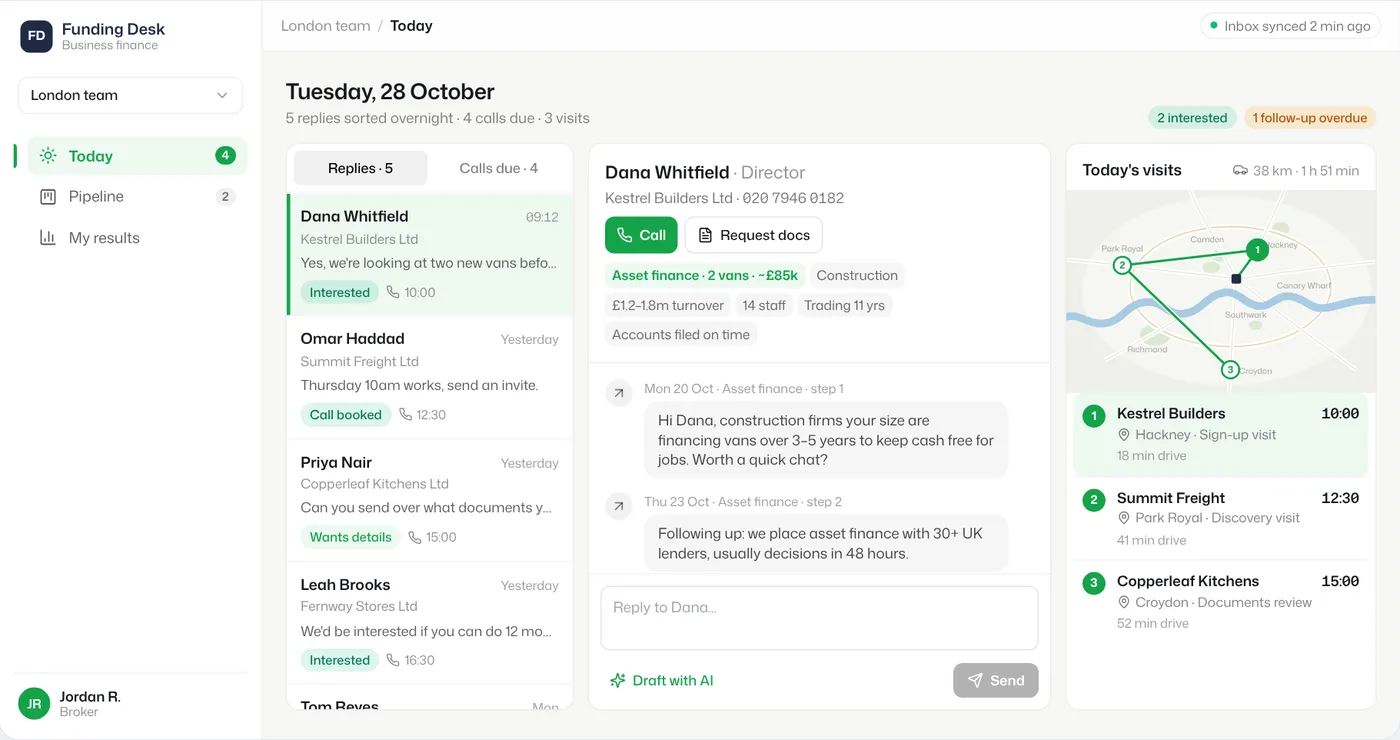
The skills write and test the emails. This is the other end: what happens when people answer. For a UK funding broker we built a lead waterfall over public-register data (57,291 raw companies into 14,620 qualified leads, 72% with an email) and one app where every outreach reply lands, sorted into one of 8 intents and matched to its contact.
The Monday.com board looked automated but wasn't. 32 follow-up rules had stopped firing in July, 498 follow-ups were more than 30 days overdue, and the next follow-up date had been typed by hand 187 times. We audited all 32 and rebuilt the 12 that mattered.
Where skills stop helping your marketing
- A skill can't fix the offer or the list. The cold-email skill makes a good email sharper. It can't make the wrong buyer want the wrong thing. The practitioners behind our brain agree: the list and the offer move results more than the wording.
- Outside skills assume outside tools. The cold-outbound skills are written around Smartlead, Clay and paid data. We map each step to our own sender and scrapers. Read the SKILL.md before you run it, and change the tool names to yours.
- Big packs aren't better. In our review, libraries with hundreds of skills were broad and shallow. Six that match your actual jobs beat 400 you never open.
- Skills don't send anything. They decide and draft. Sending needs a mailbox, a sender and a person approving. Keep it that way for anything that reaches a prospect.
- Your voice is still yours. A skill can enforce rules. The offer, the template and the first three examples should come from you; the creative-ideas playbook insists on it.
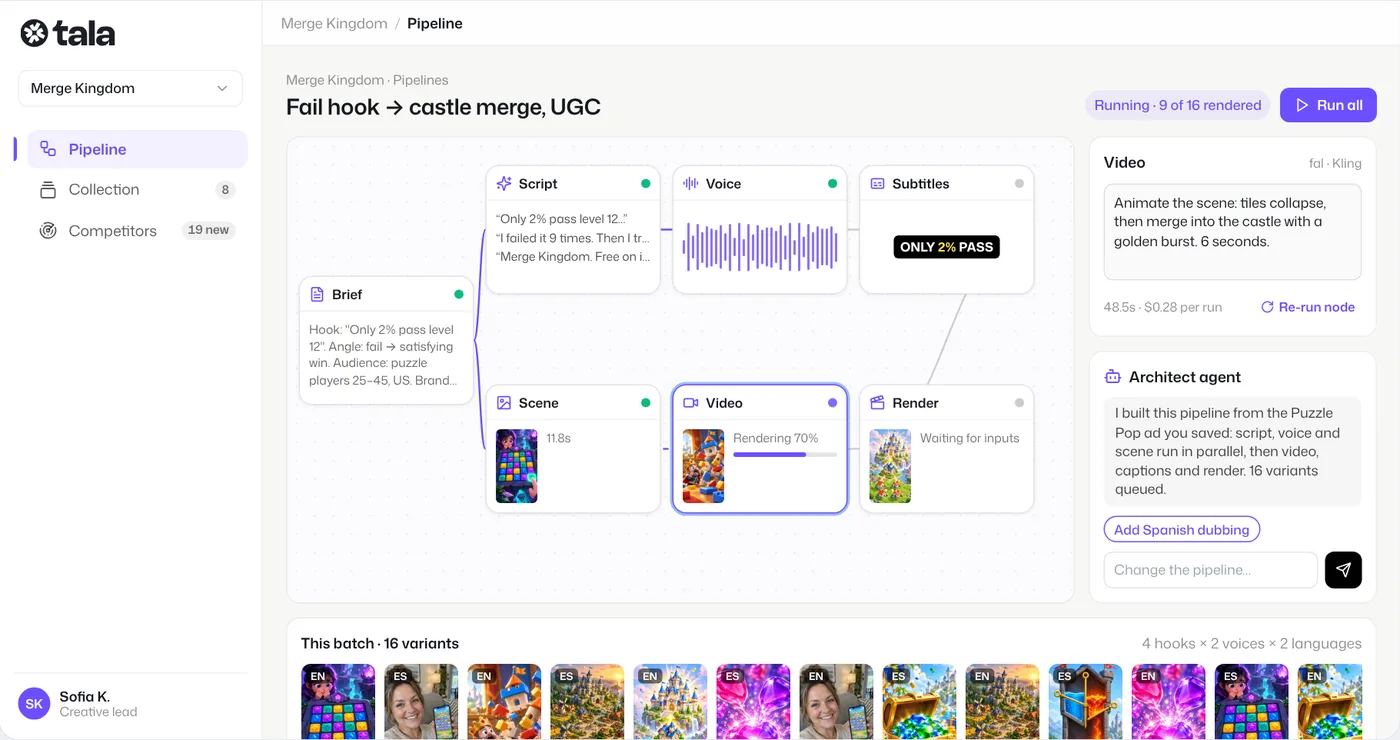
- Claude doesn't make images. For ads and visuals you need an image or video model. Our ad-creative work at Tala used Claude agents to build pipelines that call video models.
How to copy them this afternoon
- In your project, make a .claude/skills/ folder.
- Install Haines' library with npx skills add coreyhaines31/marketingskills, or copy just the cold-email and customer-research folders from GitHub.
- Clone Growth Engine X's coldoutboundskills and copy campaign-strategy, experiment-design and the creative-ideas playbook. Keep each LICENSE file.
- Write your own marketing-director/SKILL.md: the description, a "load first" list, the routing table, your hard rules. Put the long material (claims, ideal customer, anti-patterns) in a separate file it points to.
- Ask Claude Code for a real task, such as "write the first email for this segment", and check that it loads the brain first.
- Every time you correct its output, add one dated line to the anti-patterns. That file is where the value builds up.
New to the tools? Claude chat vs Cowork vs Claude Code explains where skills run, and Claude for small business covers the rest of what Claude can do for you.
Questions people ask
- What are Claude skills?
Folders of instructions, scripts and reference files that Claude loads when a task matches them. Each has a SKILL.md file with a name and a description of when to use it. Claude reads the descriptions first and loads the full skill only when needed.
- Are Claude marketing skills free?
Many are. Corey Haines' marketingskills (53 skills) and Growth Engine X's coldoutboundskills are both MIT-licensed on GitHub, so you can use and change them if you keep the licence. You still need a Claude plan to run them.
- How do I install a Claude skill?
In Claude Code, put the skill's folder in .claude/skills/ inside your project, or use a command like npx skills add coreyhaines31/marketingskills. In the Claude apps, open Customize and then Skills. Skills need code execution turned on.
- Do Claude skills work in chat and Cowork, or only in Claude Code?
Anthropic says skills are available on Free, Pro, Max, Ultra, Team and Enterprise with code execution on, in Claude Code, and in beta on the API. Anthropic's own marketing plugin is built mainly for Cowork and also works in Claude Code.
- What is the difference between a Claude skill and a plugin?
A skill is one set of instructions for one kind of job. A plugin bundles several skills with connectors and sub-agents into one install, like Anthropic's marketing plugin with its seven commands.
- What are the best Claude skills for marketing?
The ones that match jobs you do every week. For outbound we use cold-email and customer-research from Corey Haines, plus campaign-strategy, experiment-design and creative-ideas from Growth Engine X, all routed through one skill of our own that holds our rules.
- Can Claude skills write cold emails for me?
They can draft and review them against tested rules. Keep a person approving every send, give the model your own offer and three hand-written examples, and stop all follow-ups the moment someone replies.
SOURCES
- 1.coreyhaines31/marketingskills: 53 skills, MIT (GitHub) · checked 15 November 2026
- 2.growthenginenowoslawski/coldoutboundskills: cold outbound skills, MIT (GitHub) · checked 15 November 2026
- 3.Anthropic marketing plugin in knowledge-work-plugins (GitHub) · checked 15 November 2026
- 4.What are skills? (Claude Help Center) · checked 15 November 2026
- 5.Manage costs effectively: move instructions from CLAUDE.md to skills (Claude Code docs) · checked 15 November 2026
- 6.Claude Cowork: plugins bundle skills, connectors and sub-agents (claude.com) · checked 15 November 2026
- 7.Case: lead engine and revenue-ops app for a UK funding broker · checked 15 November 2026
- 8.Case: Tala, AI ad creative platform · checked 15 November 2026
Drafted with Claude from our project records; checked and edited by Mark.