Claude Code pricing in 2026: what a one-person business really pays

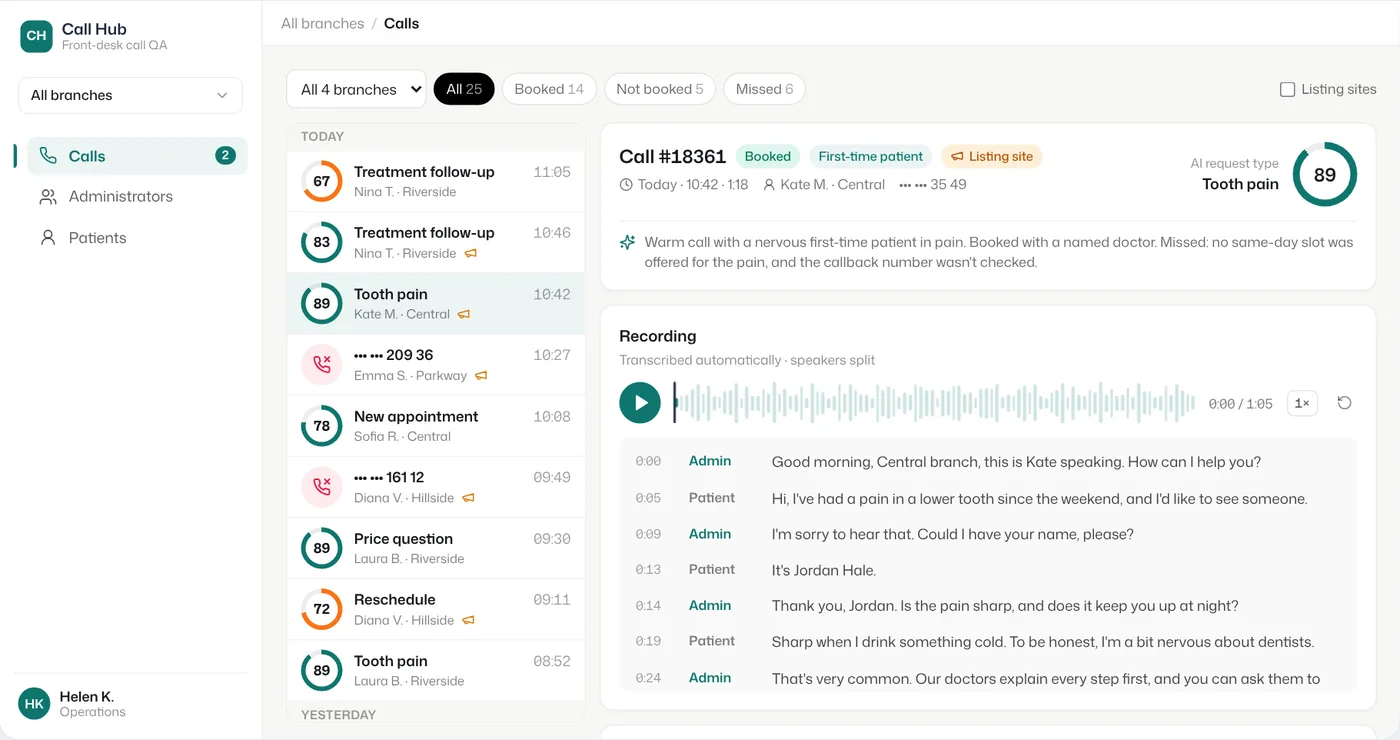
- Published
- 15 November 2026
- Prices checked
- 15 November 2026
Claude Code has no price of its own. It comes with Claude Pro ($17 a month billed yearly, $20 monthly), Max ($100), Ultra ($200) and Team seats ($20–25, or $100–125 premium). Or pay per token on the API, where Anthropic's own average is about $13 per developer per active day. Start on Pro; move up when limits stop real work.
Claude Code pricing at a glance, checked 15 November 2026
| Plan | Price | Claude Code usage | Also included | Fits |
|---|---|---|---|---|
| Free | $0 | Not included | Chat, up to 5 Projects | Trying Claude, not building with it |
| Pro | $17 a month billed yearly ($200 up front), or $20 monthly | Yes, the base allowance (1×) | Chat, Cowork, Projects | An owner who builds a tool on some evenings |
| Max | $100 a month | 5× Pro, every 5 hours and every week | $100 a month in API credits for apps you build | Someone in Claude Code most of the working day |
| Ultra | $200 a month | 10× Pro a week, no 5-hour limit (verified accounts) | $200 a month in API credits | Long build sessions, several agents at once |
| Team, standard seat | $20 per seat a month billed yearly, or $25 monthly | More than Pro, per seat | Cowork, up to $500 a month in pooled API credits | 2 to 150 people who mostly chat |
| Team, premium seat | $100 per seat a month billed yearly, or $125 monthly | 5× a standard seat | Seat types can be mixed in one team | The one person in a team who builds |
| Enterprise | $20 per seat a month billed yearly, plus usage at API rates | Billed by usage | 20-seat minimum, spend limits, audit logs | Larger firms |
| API (Claude Console) | Per token, e.g. Sonnet 5.5 $2 in / $10 out per million | Pay as you go | Workspace spend limits | Occasional use, or automation you meter yourself |
Swipe the table sideways for all columns. Plan prices from claude.com/pricing; token prices from Anthropic's API pricing page. Last checked 15 November 2026, in US dollars. Anthropic says limits depend on the model you use, how long your chats are and how large your files are.
Three things the table doesn't show:
- One allowance covers everything. Claude Code, chat and Cowork draw from the same plan limits. A long build in the morning leaves less for chat in the afternoon.
- The API credits in Max and Ultra don't pay for Claude Code. Anthropic's help page says they are separate from usage in Claude, Claude Code and Cowork. They are for apps you build on the Claude Platform.
- Running out isn't a hard stop. On paid plans you can turn on usage credits, billed at standard API rates, with a monthly spend limit you set.
How Claude Code usage maps to a plan
Subscription plans don't count dollars. They count usage in two windows: a rolling five-hour window and a weekly one. When you hit either, Claude tells you when it resets. Ultra drops the five-hour window for verified accounts and keeps the weekly one.
What fills the window fastest, from Anthropic's Claude Code cost docs:
- Long sessions. Claude Code sends your whole conversation with every request, so a one-line question in a session that has been open all day still costs the whole history.
- Coming back after a break. The first message after the cache expires re-reads your full context.
- Subagents, workflows and scheduled tasks. Each one sends its own requests on top of yours, and a scheduled task fires even while you're away.
- Agent teams. Anthropic puts them at roughly 7× the tokens of a normal session when teammates run in plan mode.
- The model. Opus costs more of your allowance than Sonnet, and Sonnet more than Haiku.
Type /usage inside Claude Code to see where your allowance went. On paid plans it breaks recent usage down by skills, subagents, plugins and connected servers, and suggests changes for anything behind 10% or more of it.
API prices, if you pay per token
| Model | Input, per million tokens | Output, per million tokens | Cache read | Batch (50% off) |
|---|---|---|---|---|
| Haiku 5.5 (prompts up to 100K tokens) | $0.10 | $0.50 | $0.01 | $0.05 / $0.25 |
| Haiku 5.5 (prompts over 100K tokens) | $0.50 | $2.50 | $0.05 | $0.25 / $1.25 |
| Sonnet 5.5 | $2 | $10 | $0.10 | $1 / $5 |
| Opus 5.5 | $4 | $20 | $0.20 | $2 / $10 |
| Fable 5.2 | $8 | $40 | $0.20 | $4 / $20 |
Swipe the table sideways for all columns. From Anthropic's API pricing page, last checked 15 November 2026. Thinking tokens are billed as output.
Anthropic publishes its own figure for API-billed Claude Code: across enterprise deployments, about $13 per developer per active day and $150–250 per developer per month, with 90% of users under $30 per active day.
Put that next to the plans. If you work in Claude Code most days, $150–250 a month on the API sits above Max at $100 and around Ultra at $200. On those averages, a subscription is the cheaper way for one person to use Claude Code every day. The API makes sense for occasional use, for a team that wants every dollar metered, or for Claude Code running inside your own automation.
What a one-person business really pays: four setups
| Setup | Plan | Per month | Why this one |
|---|---|---|---|
| Owner who builds an internal tool on some evenings | Pro | $17 billed yearly, or $20 | Enough for a few sessions a week; a long session may hit the five-hour limit |
| Owner or freelancer who builds most of the day | Max | $100 | 5× Pro's allowance in every window |
| Builder running several sessions or agents in parallel | Ultra | $200 | No five-hour limit, 10× Pro a week |
| Team of three where one person builds | Team: 2 standard seats + 1 premium | $140 billed yearly, or $175 monthly | Everyone gets chat and Cowork; only the builder pays for heavy use |
Swipe the table sideways for all columns. Totals are plan prices from claude.com/pricing, checked 15 November 2026, added up: 2 × $20 + $100 = $140; 2 × $25 + $125 = $175. Taxes not included.
Start one notch lower than you think. Move up when the limit stops real work, not when it shows a warning. Usage credits at API rates cover a rare heavy week without a bigger plan.
That covers building. A system that runs every day has a second bill.
The second bill: Claude inside the tools you build
Claude Code is how a tool gets built. Once it runs, the tool calls the Claude API on every record: every reply, every call, every report. That bill follows your volume, not your plan.
An example to size it, with assumptions, not our bill: one record sends 2,000 tokens in (instructions plus the text) and gets 1,000 tokens out (the answer plus thinking). At 15 November 2026 prices:
| Model | Cost per record | 1,200 records a month | 10,000 records a month |
|---|---|---|---|
| Haiku 5.5 | $0.0007 | $0.84 | $7 |
| Sonnet 5.5 | $0.014 | $16.80 | $140 |
| Opus 5.5 | $0.028 | $33.60 | $280 |
Swipe the table sideways for all columns. Arithmetic from list prices on Anthropic's API pricing page, checked 15 November 2026. Token counts are an assumption; measure yours on 20 real records. 1,200 a month is the call volume of our dental network. The Batch API halves these when the answer can wait.
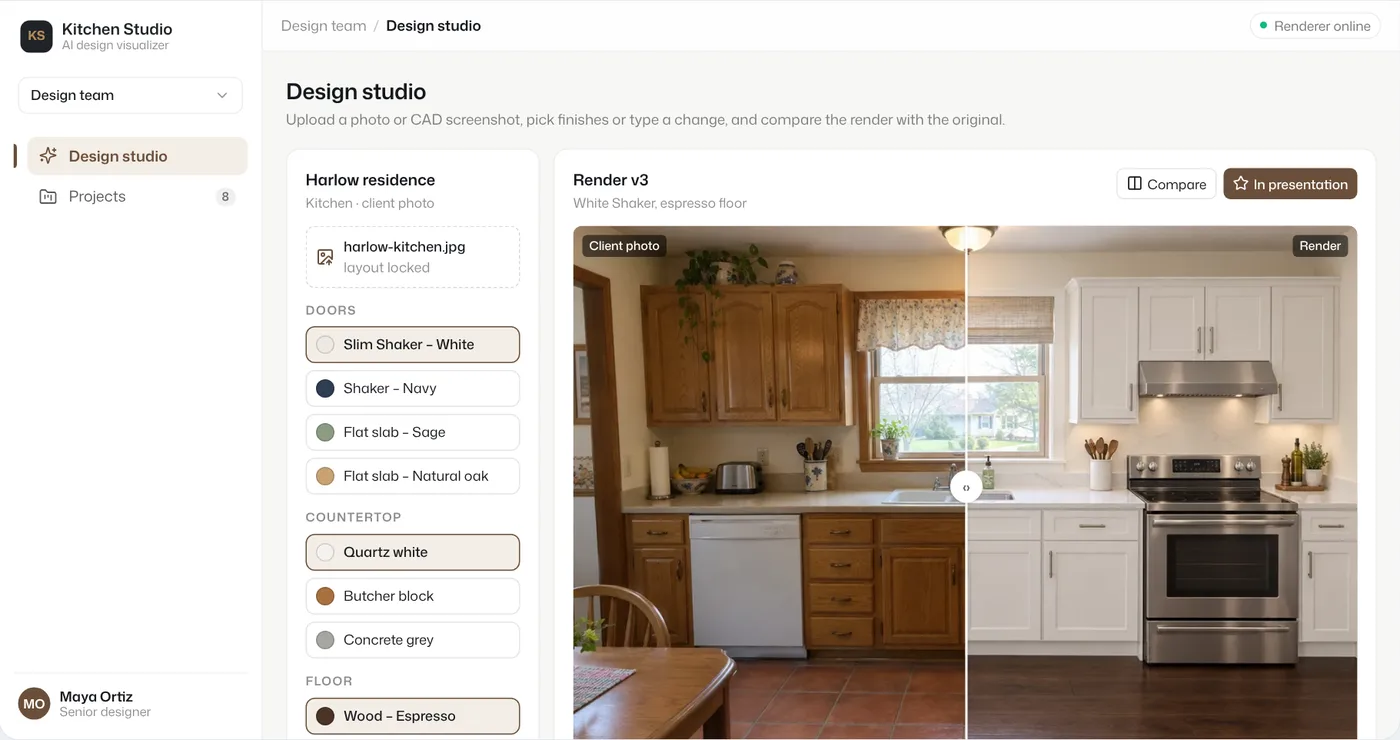
Pick the smallest model that gets your 20 test records right. The per-item costs we have measured on our builds were for data and images: about £0.18 of data per qualified lead for the broker, and about $0.138 per render for the kitchen visualizer, which runs on Gemini's image model. On the example above, a Haiku call is under a tenth of a cent.
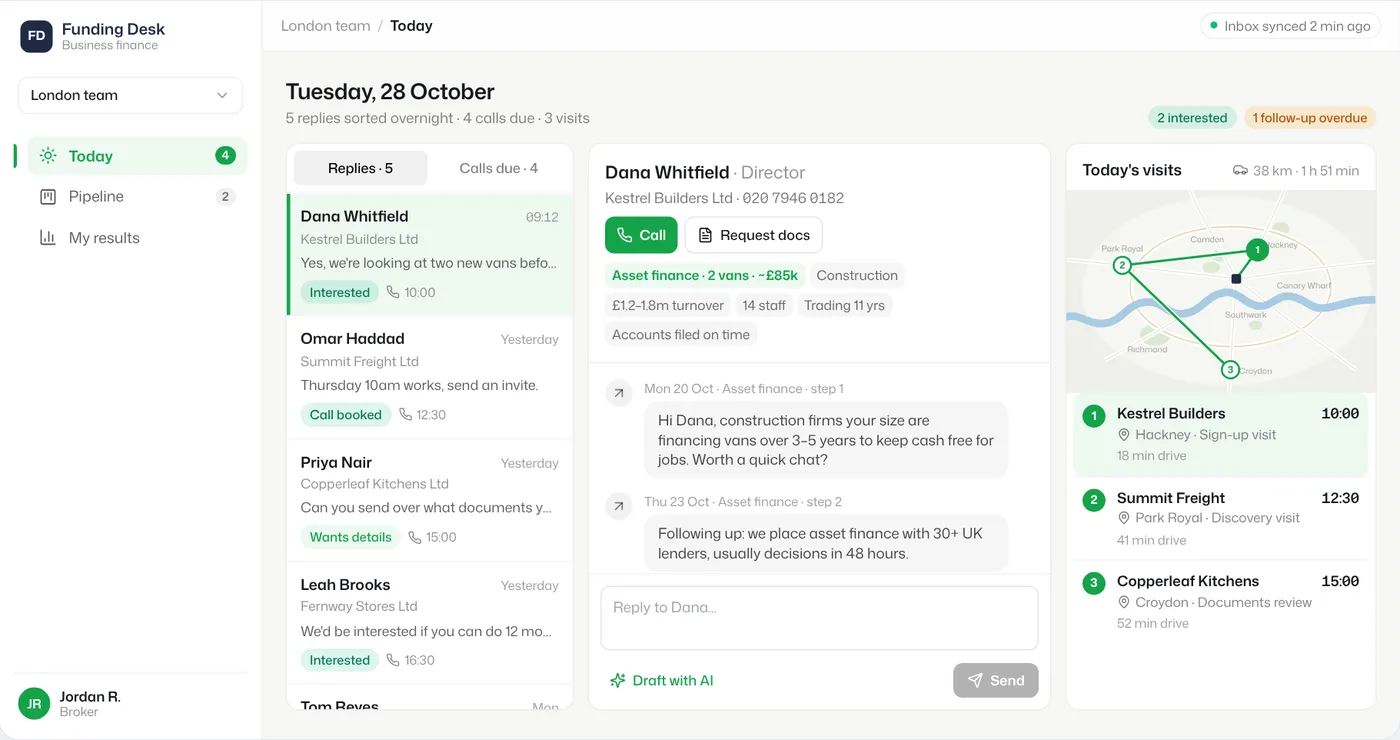
Lead engine and reply sorting for a UK funding broker
AI runs on · Built with Claude Code. Next.js and Supabase app on the client's own Vercel account
The broker had no repeatable way to find UK businesses that need funding. We built a waterfall over public-register data and one app where outreach replies land. An AI step sorts each reply into one of 8 intents; 90% are matched to the right contact with nobody touching them. Both apps were running on the client's own accounts less than 3 weeks after the broker side was onboarded.
The cost the client tracked was per qualified lead, and it was data cost. That is the number to watch in a lead system, more than the model call.
The Monday.com board looked automated but wasn't. 32 follow-up rules had stopped firing in July, 498 follow-ups were more than 30 days overdue, and the next follow-up date had been typed by hand 187 times. We audited all 32 and rebuilt the 12 that mattered.
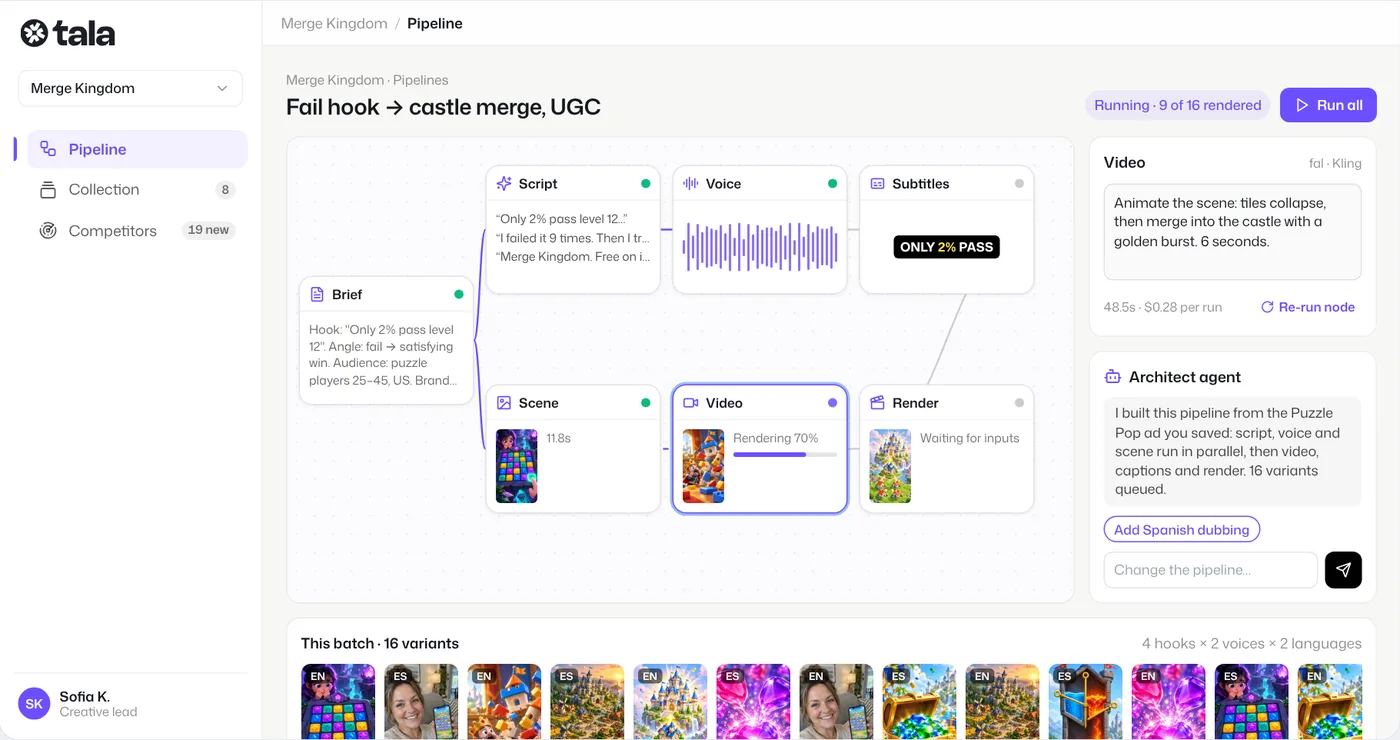
Claude agents that build ad-video pipelines
AI runs on · Anthropic Claude agents, with fal.ai video models, Gemini and ElevenLabs
Built while Mark was Tala's co-founder and CPO. A main Claude agent works with architect, editor, animator and playable agents. The architect reads a brief, designs the node pipeline and wires it itself. Variants run in parallel, so 20 take as long as one.
Here the agents ran on the API, inside the product, for every customer brief. That is the bill a subscription never covers.
Generative video is slow and brittle. Clips take minutes to render, providers fail, and models cap a clip at 10–15 seconds. The orchestration had to retry, skip steps that had already finished, and check credits before spending them.
How to spend less on Claude Code
From Anthropic's cost docs, in the order we'd apply them:
- Clear between unrelated tasks. /clear starts fresh. Name the session first with /rename so you can /resume it later.
- Match the model to the job. Sonnet for most coding, Opus for hard design calls, Haiku for simple subagents.
- Keep CLAUDE.md short. It loads at the start of every session. Anthropic suggests under 200 lines; move long, task-specific instructions into skills, which load only when used.
- Turn off connected servers you aren't using. /mcp lists them; /context shows what fills the window.
- Plan first on big changes. Plan mode (Shift+Tab) agrees the approach before Claude writes code, which saves expensive rework.
- Be specific. "Add input checks to the login form in auth.ts" lets Claude read only what it needs; "improve the app" sends it scanning everything.
We add one rule of our own. Each project keeps a short knowledge-base folder with a map file. A session reads the map first, then only the files its task needs, so nobody pays to re-read the whole project every morning.
When Claude Code is the wrong spend
- The job doesn't need code. A weekly report or an inbox clean-up fits Cowork on the same plan. We compare the three in Claude chat vs Cowork vs Claude Code.
- The rule is fixed. "When the invoice is paid, mark the deal won" needs a one-line automation, not a model and not a build.
- Nobody will own the code. Claude Code writes a working first version fast. Someone still has to review logins, data access and backups, and fix it when an outside service changes. If nobody will, the cheapest build is the one you don't start.
- You're paying for Ultra out of worry. Check /usage for a week first. Anthropic says unexpectedly high spend usually traces back to long sessions that were never cleared, or Opus left as the default model.
- You'd use it twice a month. Pay per token on the API, or stay on Pro.
How to choose this week
- Start on Pro, billed monthly, for the first month.
- Build one real thing: a small internal tool, a script, a report generator.
- Run /usage at the end of each day. Note when you hit the five-hour limit and what you were doing.
- Hit it most days on real work? Move to Max. Running agents in parallel and still blocked? Ultra.
- If what you built will call Claude on every record, size that bill separately: 20 real records, the smallest model that gets them right, times your monthly volume.
For the bigger picture of what Claude can run in a small business, start at Claude for small business.
Questions people ask
- Is Claude Code free?
No. On 15 November 2026 the Free plan did not include Claude Code. The cheapest way in is Pro at $17 a month billed yearly or $20 monthly. You can also pay per token through a Claude Console account.
- How much does Claude Code cost per month?
On subscription: Pro $17–20, Max $100, Ultra $200, a Team standard seat $20–25 and a premium seat $100–125. On the API there is no fixed price; Anthropic's own average across enterprise deployments is $150–250 per developer per month.
- Is Claude Max worth it for Claude Code?
If you hit Pro's five-hour limit on real work most days, yes: Max gives 5× Pro's usage for $100. If you hit it once a week, usage credits at API rates may cost less than the upgrade. Check /usage for a week before you upgrade.
- Is Claude Code cheaper with the API or a subscription?
For daily use, a subscription. Anthropic puts API-billed Claude Code at about $13 per developer per active day, or $150–250 a month, which is more than Max at $100. The API is cheaper only if you use Claude Code a few days a month.
- Do the API credits in Max and Ultra cover Claude Code?
No. Anthropic's help page says the monthly API credits in Max ($100) and Ultra ($200) are separate from usage in Claude, Claude Code and Cowork. They are for apps you build on the Claude Platform.
- What happens when I hit the Claude Code usage limit?
Claude Code tells you when the window resets: the five-hour one or the weekly one. You can wait, switch to a smaller model if the limit is model-specific, or turn on usage credits, billed at standard API rates with a monthly cap you set.
- Does Claude Code share limits with Claude chat?
Yes. Chat, Cowork and Claude Code draw from one allowance per seat, reset on a five-hour and a weekly window. Agent work uses it faster than chat.
SOURCES
- 1.Claude plans and pricing (claude.com) · checked 15 November 2026
- 2.API pricing per model, batch and long-context rules (Claude Platform docs) · checked 15 November 2026
- 3.Manage costs effectively: averages per developer, /usage, ways to reduce tokens (Claude Code docs) · checked 15 November 2026
- 4.Usage credits for paid Claude plans (Claude Help Center) · checked 15 November 2026
- 5.Claude Code product page: plans and surfaces (claude.com) · checked 15 November 2026
- 6.Case: lead engine and revenue-ops app for a UK funding broker · checked 15 November 2026
- 7.Case: Tala, AI ad creative platform · checked 15 November 2026
- 8.Case: front-desk call QA for a dental clinic network · checked 15 November 2026
- 9.Case: AI kitchen visualizer for a US design firm · checked 15 November 2026
Drafted with Claude from our project records; checked and edited by Mark.